AI has become one of the most talked-about wedding planning tools of the moment. From timelines to checklists to vendor suggestions, it can feel like you have access to instant answers for everything. But there’s a growing misconception underneath that convenience: the idea that AI for planning can replace a real planner.
It can’t.
Because AI gives answers, but it doesn’t give judgment.
At its core, AI is system-generated. It works by pulling patterns, predicting outcomes, and offering structured responses based on existing data. And while that can be helpful in certain contexts, wedding planning is not purely data-driven. Weddings are not symmetrical systems. They are not predictable sequences that always respond the same way.
Yes, there are patterns in wedding planning, and yes, there is structure—but no two events actually follow the same emotional, relational, or logistical reality.
Allegro Notes
MONTHLY JOURNAL
Exploring how rhythm, timing, and intentional hosting transform gatherings into shared experiences
Coda
Each month, we reflect on the moments that defined our work — and the standards that continue to guide every Allegro experience.
April 2026
Why AI Is Not Enough to Plan a Wedding—and Why Event Planners Are Essential
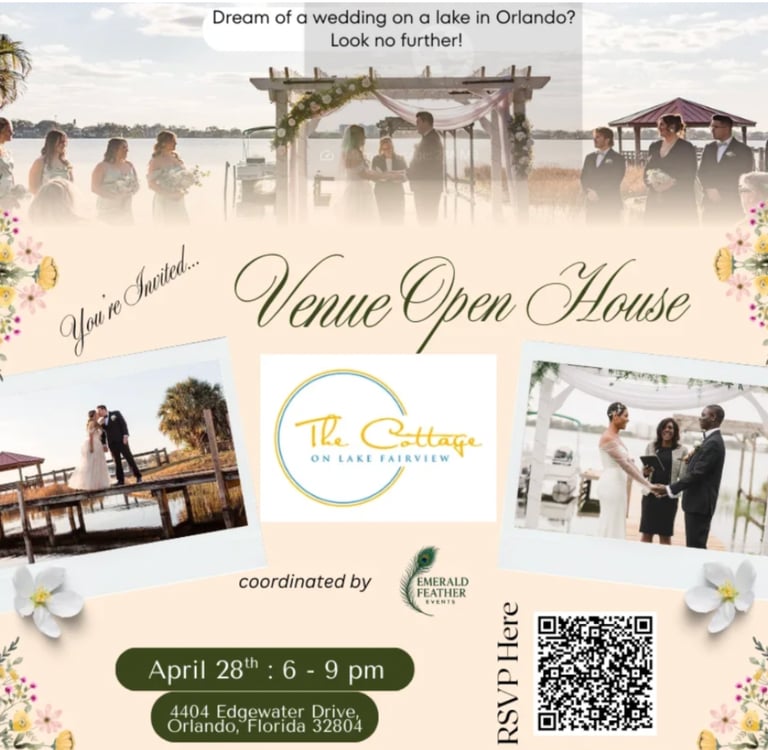
Open House The Cottage on Lake Fairview
Planning a wedding or special event? Check out the Cottage on Lake Fairview, for their open house on April 28th, 2026, 6 -9pm
For more information or to reserve tickets: http://eventbrite.com/e/spring-open-house-at-the-cottage-on-lake-fairview-tickets-1984986205174
Upcoming Event
AI can suggest timelines. It can build checklists. It can even help you explore ideas through different wedding planning tools. But what it cannot do is prioritize what actually matters most in your wedding.
Because prioritization requires judgment.
And judgment requires understanding nuance.
Weddings are deeply emotional, relationship-driven environments. They involve family dynamics, expectations, personalities, sensitivities, and unspoken pressures that no algorithm can fully interpret. So while AI might give you a “correct” answer, it’s often a generic one. And generic planning in an emotional environment usually creates more confusion, not less.
In many cases, relying too heavily on AI for planning leads to more prompting, more second-guessing, and ultimately more stress than clarity.
AI for Planning vs. Real-World Judgment
The Limits of AI in Real Wedding Conditions
One of the biggest gaps in using AI for planning is that it lacks real-world constraints.
It doesn’t understand vendor availability in real time. It doesn’t account for venue rules, setup restrictions, weather shifts, or timing conflicts that inevitably come up during production. It doesn’t feel the weight of a tight turnaround or the pressure of coordinating multiple moving parts under real deadlines.
And even if AI evolves further—becoming more interactive, more responsive, even “human-like”—there is still a fundamental gap it cannot cross.
Execution.
AI doesn’t show up on your wedding day.
It doesn’t walk the room, adjust the timeline in real time, solve the unexpected issue quietly in the background, or make judgment calls under pressure. And there is no accountability layer when things shift.
That is where planners become essential.
Why You Need a Planner
A professional planner is not just building a plan—they are reading the room before the room even exists.
They understand pacing, energy, and flow. They know when to pull back, when to push forward, and when to let a moment breathe. They interpret not just logistics, but emotion.
This is the part that no system—no matter how advanced—can replicate.
Because weddings aren’t logical. They are emotional ecosystems. And someone who doesn’t understand your dynamic, your family structure, your expectations, and your personalities will default to a template. Even a well-designed one.
That’s the difference between information and insight.
Experience Design Is the Missing Layer
Perhaps the most overlooked difference between AI and real planners is experience design.
AI can plan tasks.
Planners design the flow and the feeling.
That includes how guests move through space, how energy builds throughout the day, when moments land emotionally, and how transitions feel seamless instead of mechanical. It’s not just about what happens—it’s about how it feels while it’s happening.
That is the layer that turns logistics into memorable events.
The Role of AI in Modern Wedding Planning
This is not about dismissing AI entirely. In fact, when used correctly, it can be incredibly useful. At Allegro Events, we use technology and wedding planning tools every day to organize ideas, streamline communication, and support internal structure.
But it remains exactly that—support.
AI is a tool that helps you think. It is not a replacement for someone who can feel, interpret, and execute in real time.
Final Thought
AI can help you plan a wedding.
But it cannot plan your wedding.
Because what makes a wedding meaningful isn’t just the schedule or the checklist—it’s the judgment behind it, the adaptability within it, and the human understanding that holds it all together.
That’s why planners aren’t becoming less important in the age of AI.
They’re becoming even more essential.





Bridal & Wedding Expo
Are you a 2026/2027 Bride? Check out the FLorida Bridal & Wedding Expo on May 9th, 2026, from 12 -5pm
For more information or to buy tickets: https://flbridalshows-oc.com/free-passes/